Address
304 North Cardinal
St. Dorchester Center, MA 02124
Work Hours
Monday to Friday: 7AM - 7PM
Weekend: 10AM - 5PM
Address
304 North Cardinal
St. Dorchester Center, MA 02124
Work Hours
Monday to Friday: 7AM - 7PM
Weekend: 10AM - 5PM
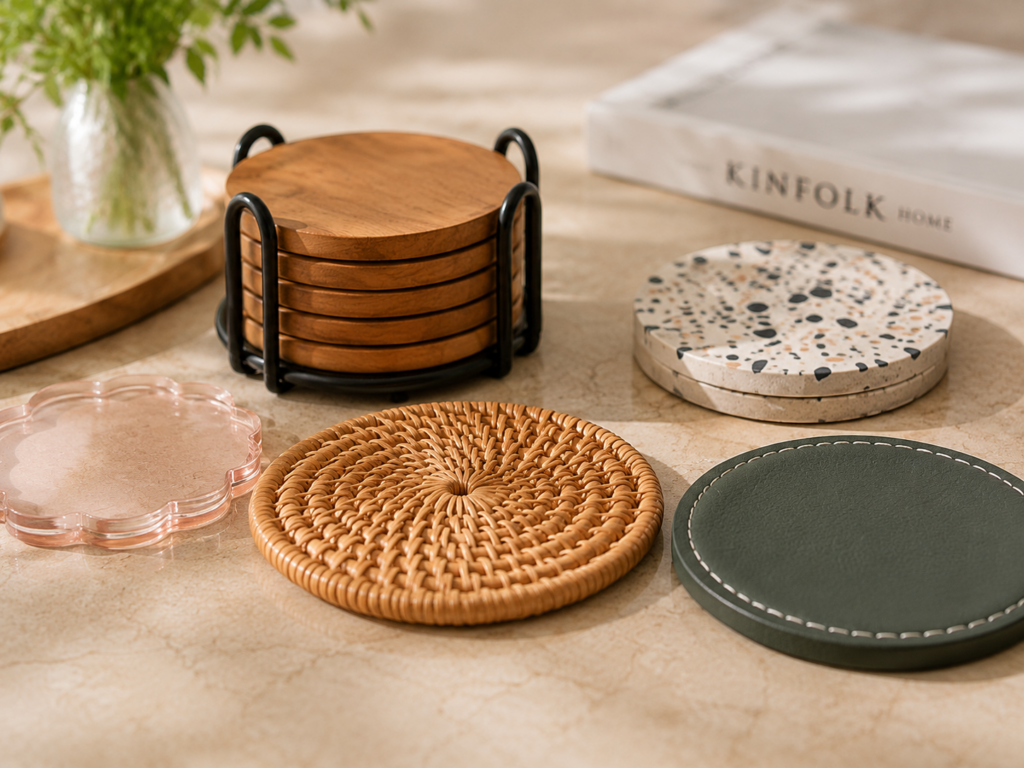
Coasters may serve the same basic purpose, but the material can make a noticeable difference in how they look, feel, and fit into an everyday space.
Wood, woven fibers, acrylic, and PU each bring a different character to a tabletop. Some feel warm and natural, while others create a cleaner or more modern appearance. Care requirements can also vary depending on the material.
Understanding these differences can make it easier to choose coasters that suit your table, drinkware, and daily routine.
Wood coasters bring natural warmth to a tabletop and can work well in a wide range of interior styles.
Their grain, tone, and texture can make each piece feel slightly different, especially when natural wood is used. They often pair well with coffee tables, dining tables, desks, and other spaces that already include wood furniture or neutral decorative elements.
Wood coasters may be a good option if you prefer:
Because wood is a natural material, variations in grain, color, and texture are normal and can be part of the product’s appearance.
Wood products generally benefit from gentle care.
Where appropriate, wipe moisture away after use and allow the coaster to dry thoroughly. Avoid prolonged soaking unless the specific product instructions state otherwise.
Harsh cleaners or excessive moisture may affect some wood finishes, so it is useful to review the care instructions provided with the product.
Woven coasters can add texture and a more relaxed, casual feel to a tabletop.
They may be made from natural or synthetic woven materials and are often suited to spaces with softer textures, neutral colors, or handcrafted decorative details.
Their surface pattern can also make them visually interesting even when they are not in use.
Woven designs may suit customers who like:
They can work particularly well on coffee tables, dining tables, breakfast areas, or relaxed home settings.
Care requirements depend on the specific material.
It is generally a good idea to remove excess moisture promptly and allow the coaster to dry completely before storing or stacking it.
Some woven materials should not be soaked, scrubbed aggressively, or exposed to strong cleaning products.
Acrylic coasters can offer a cleaner, lighter, or more playful appearance depending on their color and design.
Because acrylic can be produced in clear, translucent, solid, or decorative styles, it works well in both modern and more colorful interiors.
Acrylic designs can also be useful when you want a coaster that adds visual interest without introducing a heavy or textured appearance.
Acrylic coasters may appeal to you if you prefer:
They can fit naturally on work desks, side tables, coffee tables, and other contemporary spaces.
Acrylic surfaces are generally best cleaned gently.
Use a soft cloth where appropriate and avoid abrasive tools or harsh cleaning products that could scratch or dull the surface.
The individual product page should be checked for specific cleaning recommendations.
PU coasters can provide a smooth, structured appearance and may work especially well in modern desks, offices, dining areas, and minimal interiors.
Depending on the design, PU can resemble leather while offering a consistent surface and a range of colors.
It can be a useful option when you want a coaster that feels simple, clean, and easy to coordinate with surrounding décor.
PU coasters may be suitable if you prefer:
PU designs can be especially practical visually in spaces where you want tabletop accessories to feel neat and understated.
PU products generally benefit from gentle wiping rather than soaking.
Avoid harsh chemicals, abrasive cleaners, and excessive heat unless the product instructions specifically allow them.
Allow the product to dry before stacking or storing.
Each material creates a different tabletop effect.
Wood tends to feel warm, natural, and traditional.
Woven materials introduce texture and a softer, more relaxed look.
Acrylic can feel clean, modern, colorful, or playful.
PU often creates a smoother and more structured appearance.
There is no single material that is right for every space. The better choice depends on how you use the coaster and the type of atmosphere you want to create.
The surface underneath the coaster is also worth considering.
A wooden coffee table may pair naturally with woven or wood coasters, while acrylic or PU can create more contrast.
On a desk, a simple PU or acrylic coaster may fit well with office accessories.
For dining tables, matching coaster sets can help create a more coordinated appearance.
The material does not always need to match the table. Sometimes a contrast in texture or color can make the tabletop feel more visually balanced.
Think about when and where you use coasters most often.
If you regularly enjoy coffee or tea at your desk, you may prefer a simple design that does not take up much space.
If coasters are part of your living room décor, appearance and texture may matter just as much as everyday practicality.
For dining spaces, you may prefer a coordinated set that can be used by several people at once.
Your routine can help determine which material and design make the most sense.
Even within the same material category, different products can vary in:
For this reason, it is important to review the individual product page rather than choosing based on material alone.
The right coaster material is ultimately the one that works naturally with your table, drinkware, and everyday habits.
If you prefer natural textures, wood or woven designs may be a good place to start. If you prefer a cleaner or more modern look, acrylic or PU may fit more naturally into your space.
At MANNINGJEREMY, we offer coaster designs in different materials, shapes, colors, and textures so you can compare options and choose pieces that work with your everyday tabletop.